
Storage furniture earns its place when it solves a real access problem without taking over the route through the room. Measure the object, the wall, the doorway and the drawer or door opening before buying. A cabinet that holds everything but cannot be opened with the sofa in place is not useful storage.
Audit the clutter and the room
For one week, note what lands on the floor, chair or nearest surface. Group it by how often it is used: daily, weekly, seasonal and \u201Ckeep but rarely touch\u201D. Measure the largest item in each group. Books need a different shelf depth from a vacuum, boots or folded bedding.
| Storage job | Useful planning depth | Check before ordering |
|---|---|---|
| Keys, post and small chargers | 150-250mm | Tray height, cable exit and a landing surface near the door |
| Books and records | 250-350mm | Internal shelf span and weight capacity |
| Sideboard or living-room cupboard | 350-450mm | Door swing, skirting and media ventilation |
| Folded clothes and linen | 400-500mm | Drawer opening and shelf height |
| Vacuum, mop or laundry | 450-600mm | Full height, handle clearance and a wipeable interior |
Keep about 900mm for a comfortable main route where possible; 700mm can work in a tight secondary route, but a door or drawer must not reduce it at the point of use. Measure skirting depth, sockets, radiators, coving, door swings and the height of the delivery route. IKEA’s UK storage furniture pages are useful for comparing modular widths, but use the actual measurements of your room before ordering.
Hallway storage that earns its footprint
A 250-350mm-deep shoe cabinet can be more useful in a narrow hall than a deep bench. Give the door a clear opening, provide a tray for keys and post, and put hooks where adults and children can reach them. Count the pairs of shoes first: a narrow cabinet that holds six pairs will not solve a family’s daily pile.
A bench works when the seat is comfortable, its lid can open without striking the wall and bags have a home beside it. For a rented home, use freestanding hooks, a slim console or a bench with a weighted back rather than assuming you can drill into the hallway. Fix tall units to the wall wherever the landlord and substrate allow.
Living room solutions
Sideboards and media units
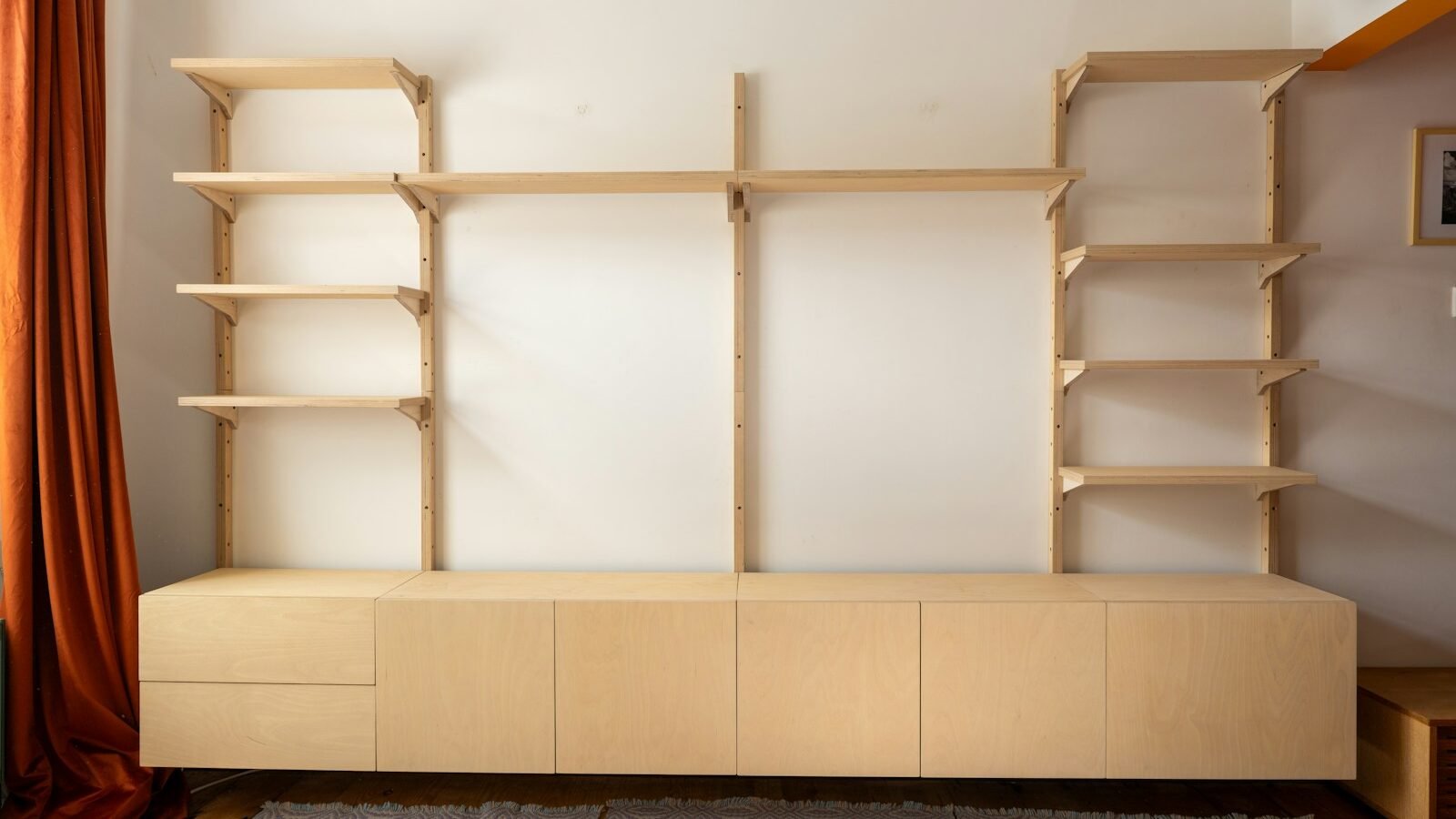
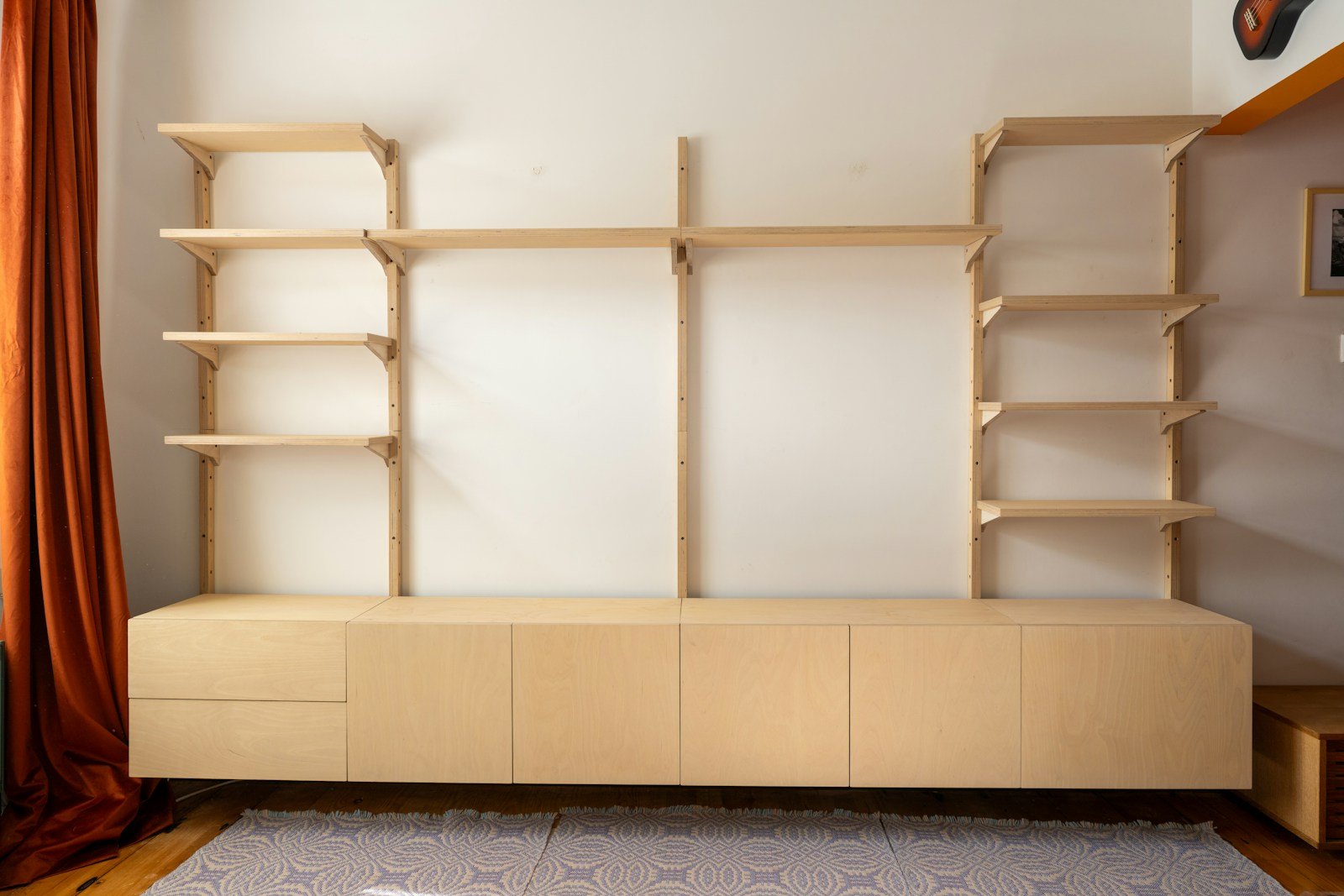
A sideboard with drawers for small objects and cupboards for bulky items hides games, chargers and paperwork better than open shelving. A useful shallow option may be 350-400mm deep. For a media unit, plan the cable entry, ventilation and remote-control access; do not put an amplifier, games console or streaming box in a sealed compartment.
A console around 400mm deep can work behind a sofa or along a narrow wall. Leave enough space to walk between it and the furniture, and check that drawers will not hit a radiator or door.
Ottomans and lift-top tables
An ottoman can be a seat, footrest and blanket box, but the lid needs a clear route and a hinge that will not slam on small fingers. A lift-top coffee table is useful for a laptop or meal; allow for the raised top and keep the mechanism away from trailing cables.
Bedroom storage without dead space
A storage bed uses the footprint already occupied by the mattress. Drawers need side clearance, while an ottoman base needs enough space to lift and enough headroom for its gas struts. Store spare bedding, suitcases and seasonal clothing in an ottoman; keep everyday clothes in drawers or a wardrobe so the bed does not need to open every morning.
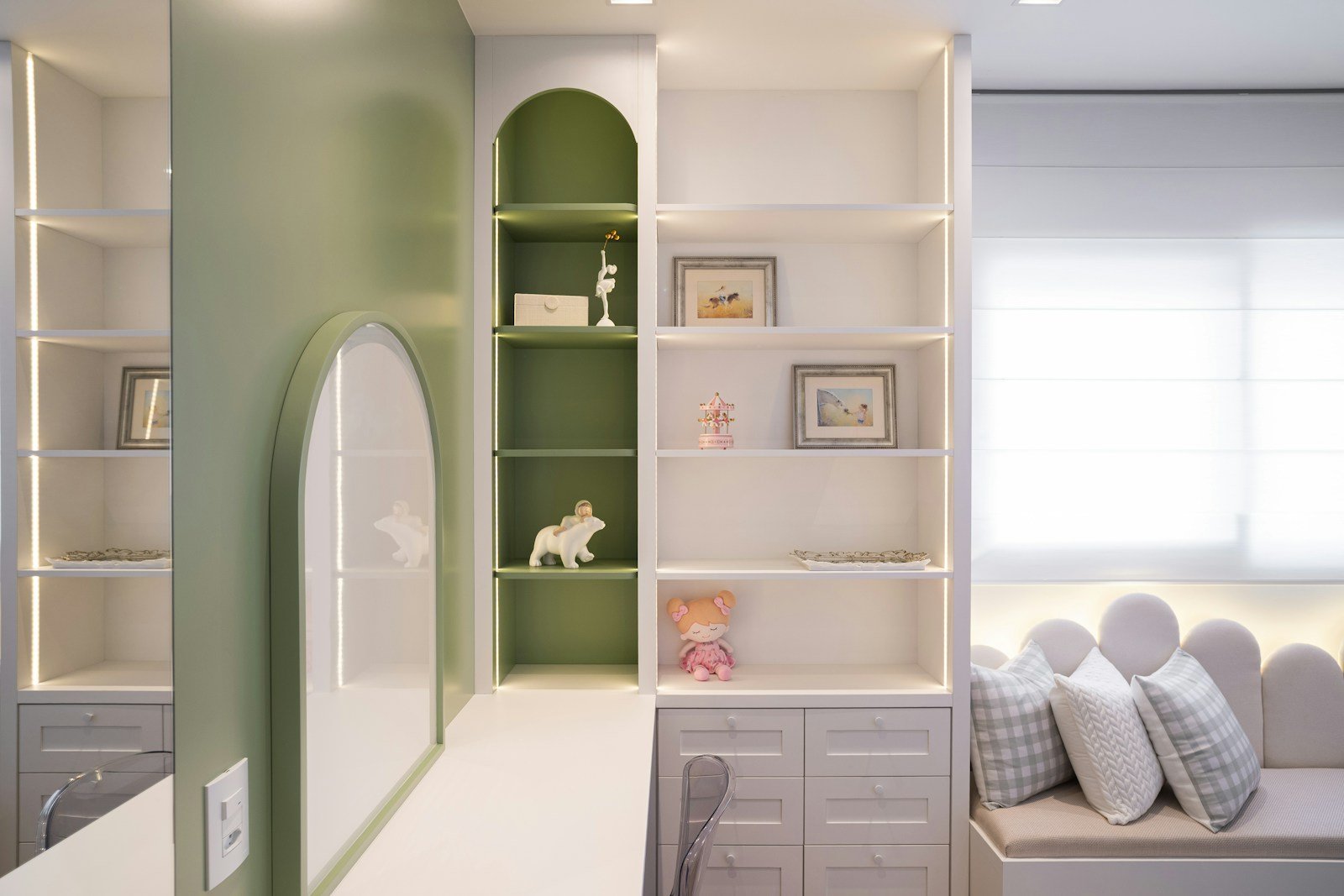
Wardrobes are easier to use when there is a small gap between hanging rails and shelves rather than one deep void. Put short garments above drawers, long garments where the hem will not touch the floor and rarely used boxes above eye level. A bedside table with a concealed drawer can remove charging cables from the floor without becoming a bulky cabinet.
Home office, dining room and utility storage
Home office
Use a 300-400mm-deep shelving run for books and files, with one closed section for paperwork and equipment. A fold-down desk needs a clear chair position and cable slack; measure the desk open, not only folded.
Dining room
A 350-450mm-deep sideboard can hold table linen, crockery and serving pieces. Put heavy items low, keep doors clear of dining chairs and measure the pulled-out chair, not the table alone.
Utility room
Give the vacuum, mop, drying rack and laundry baskets a vertical home. A tall cabinet with a wipeable interior is useful, but leave appliance ventilation and service access. A rolling laundry bag can move between rooms without blocking the only route.
Kitchen and bathroom pieces
In a kitchen, use pull-out pantry modules for narrow gaps only when the runners are rated for the load. A drawer for pans needs more height and stronger runners than a drawer for cutlery. Wall cupboards reduce floor pressure but must be fixed to the correct substrate and kept clear of appliance heat.
Bathroom storage should tolerate humidity and splashes. A mirrored cabinet around 100-150mm deep can hide daily toiletries; a tall closed cupboard can hold spare toilet rolls and towels. Keep ordinary chipboard away from wet floors and shower spray, seal cut edges and preserve extractor access.
Under-stairs and awkward spaces
Under-stairs storage should follow the actual ceiling line. Use drawers or doors of different heights rather than one huge door that cannot open under the slope. In an alcove, measure the back wall, both side returns and the skirting; a \u201C600mm-wide\u201D unit may not fit if the wall is out of square. Bespoke joinery is not automatically better, but it can win when a standard module leaves unusable wedges on both sides.
Construction details worth paying for
- Back panels: thin backs can rack unless the cabinet is fixed securely; check how the unit is braced.
- Runners and hinges: soft-close hardware is useful, but load rating and replacement availability matter more.
- Edges: sealed edges resist everyday moisture better than raw particleboard.
- Adjustability: movable shelves and pre-drilled holes let one unit change as the room changes.
- Anti-tip: anchor tall furniture to a suitable wall, especially in homes with children or pets.
- Cables: allow a bend radius and ventilation around plugs, hubs, amplifiers and chargers.
- Access: do not cover a stopcock, consumer unit, boiler service hatch or radiator valve with permanent furniture.
Modular flat-pack furniture is adaptable and often easier to move; freestanding pieces are easier to replace; bespoke furniture can make use of awkward dimensions but costs more and is less portable. Choose based on how long you expect to stay and whether the storage needs are likely to change.
Frequently asked questions
Q1. How deep should storage furniture be?
Use about 150-250mm for small hallway items, 250-350mm for books, 350-450mm for sideboards and 400-500mm for folded clothes. The correct depth is the smallest one that holds the object without blocking the route or making doors hard to reach.
Q2. What storage works best in a small living room?
Choose one or two multifunctional pieces: a shallow sideboard with cupboards, an ottoman for blankets or a console with drawers. Avoid filling every wall with open shelves; closed storage hides visual noise while a clear route keeps the room usable.
Q3. Are storage beds a good idea?
They are useful for bulky, infrequently used items, provided the drawers or lift mechanism can open fully. Measure the clearance beside and above the bed, and check the base rating, ventilation and warranty before choosing one.
Q4. Should storage furniture be open or closed?
Use open shelves for books and objects you reach or enjoy seeing; use doors and drawers for cables, paperwork, cleaning products and irregular clutter. A mixed piece usually gives the best balance, with the frequently used items at hand and the messy categories enclosed.
Q5. How do I make storage safe in a home with children?
Anchor tall units, use stable low furniture, fit drawer stops where appropriate and keep climbing temptations away from windows. Never assume a heavy cabinet is safe without a wall fixing suitable for the wall type.
Final Thoughts
The best storage furniture is measured around the things you own and the route you need every day. Draw the open doors and drawers on the floor, allow for cables and maintenance, and choose modular or bespoke construction only after the practical checks are complete. For hidden chargers and hubs, the smart-home essentials guide pairs well with this room plan; for bedroom footprints, see the bed buying guide.
4 thoughts on “Smart Storage Furniture Solutions for Every Room: A UK Measurement Guide”